Formal moderated studies
Professional facilitators conducted sessions in observation suites, allowing the team to watch where members understood the model, hesitated, or interpreted the interaction differently than expected.
Case study 02 · WeightWatchers
The strongest surviving evidence is not a finished screen. It is the work that made the product buildable: personas, use cases, business rules, decision flows, exception handling, and moderated testing.
Context
This was my first full-time information-architecture position. The work connected member goals and personas to detailed interaction behavior, while accounting for the technical limitations of the early web.
Single-page applications and asynchronous loading were not yet mature. Load time and server calls shaped the interaction, so the specification had to address both user behavior and the realities of implementation.
01 · Menu Planner
The menu-planner document did more than describe a page. It defined product states, what members could change, when information became committed, and what later actions followed from earlier choices.
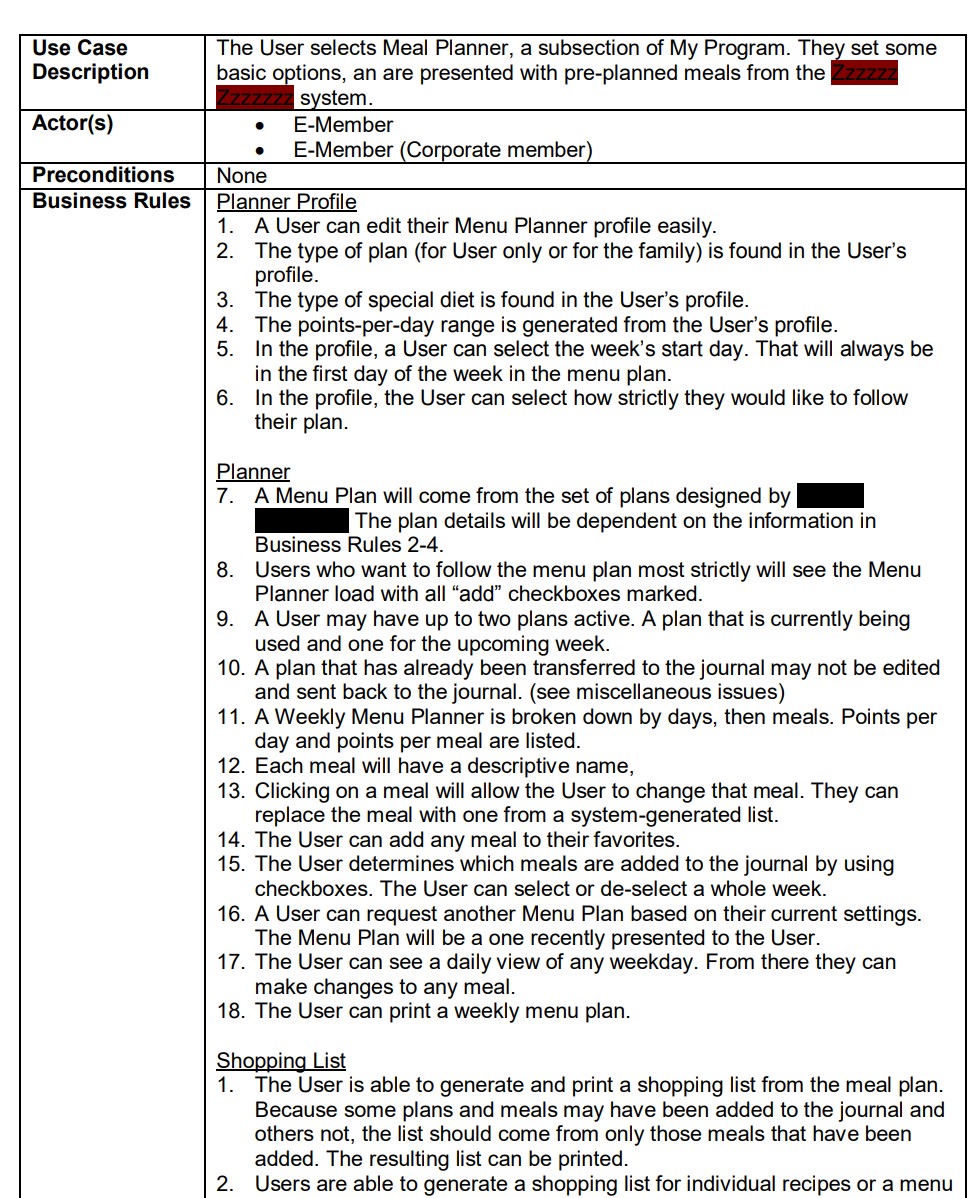
A plan could be current or upcoming, transferred or not transferred, editable or locked, selected in whole or in part, replaced, favorited, printed, or used to generate a shopping list.
The design problem was a system of behaviors—not a collection of pages.
This is the central value of the artifact. It translates a product concept into explicit rules that design, engineering, product, and testing can share.
02 · Beyond the primary screen
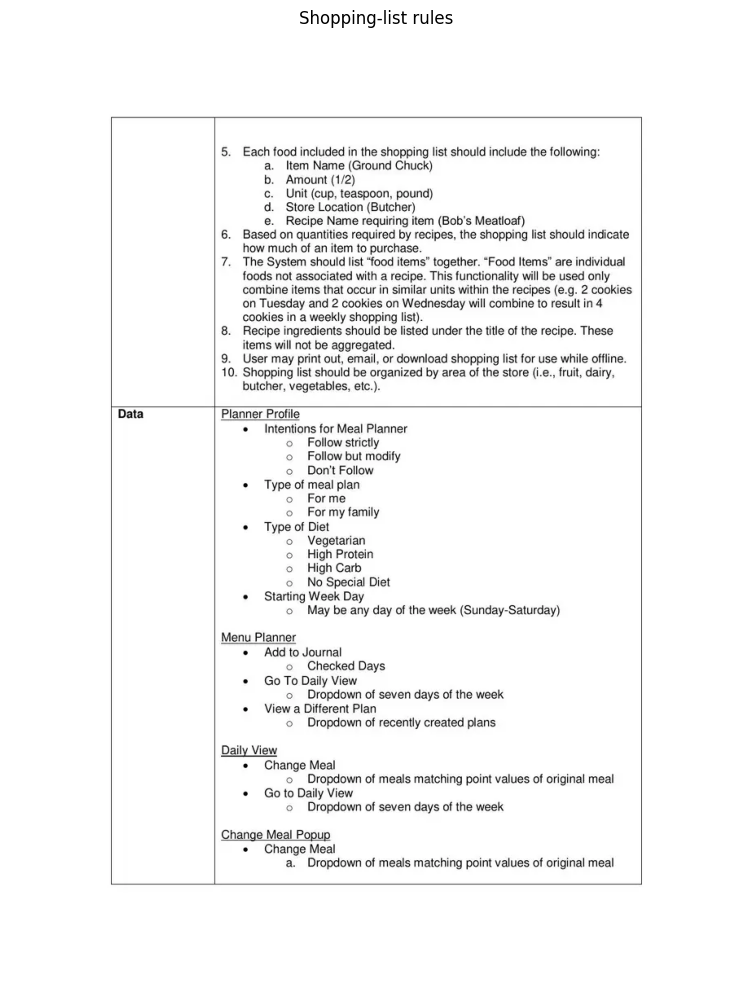
The shopping list was treated as a downstream consequence of meal planning rather than as an isolated feature. The specification followed what members selected into the later task of acquiring ingredients.
Meals added to the plan determined the shopping list. The rules addressed aggregation, recipe context, purchase quantities, organization by store area, and the practical ways a member might carry the information away.
03 · Exceptions
The use case did not stop at the happy path. It specified unavailable pages, unavailable suitable plans, conflicts with existing meals, administrative maintenance, and unresolved questions.
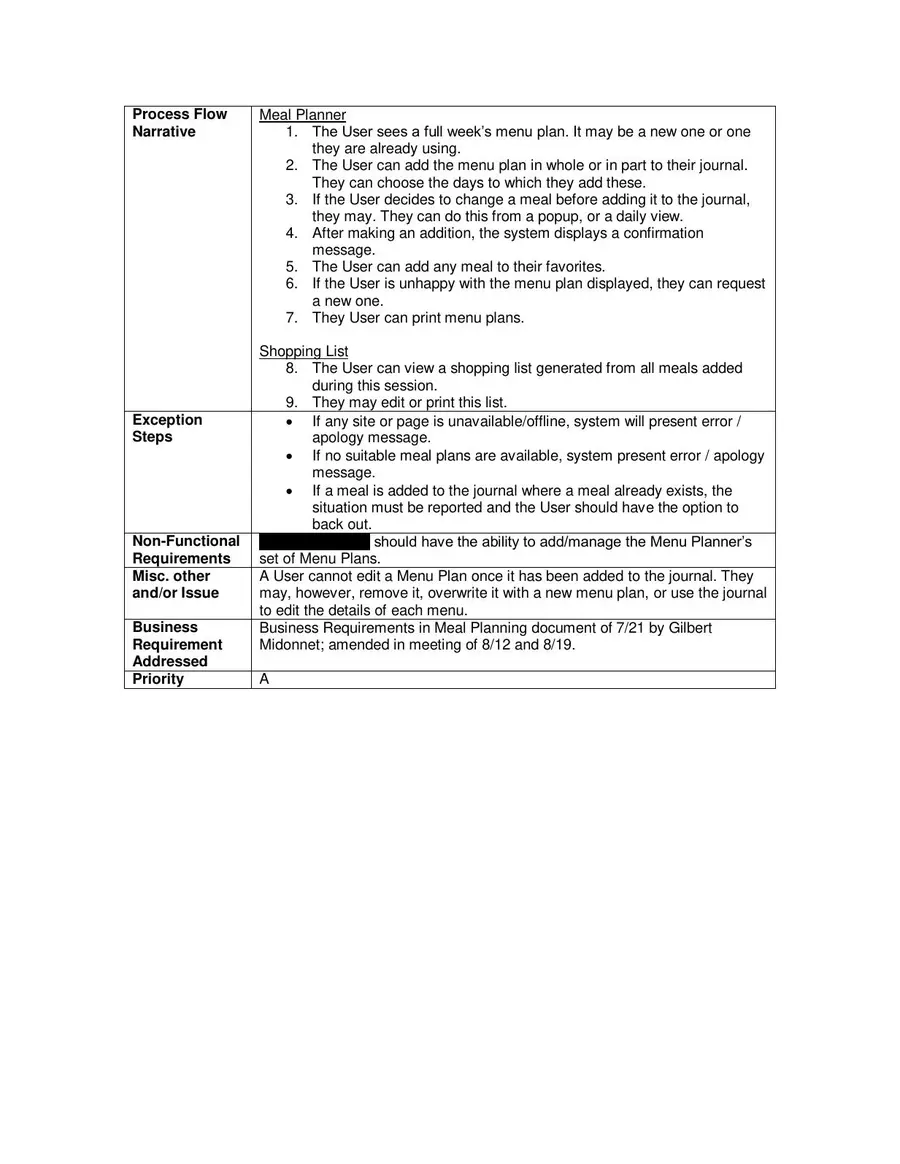
Once information is committed elsewhere, a failure or conflict can affect more than the current screen. The document therefore addressed recovery, messaging, content availability, and the people responsible for maintaining the underlying plan set.
What happens when a page or service is unavailable?
What happens when a meal already occupies the target location?
What happens when no suitable plan is available?
How is the menu-plan set administered over time?
04 · Exercise flow
The exercise flow joined user action, system response, validation, duplicate handling, favorites, Quicklist behavior, and journal behavior into one executable view of the interaction.

A sitemap could show where the exercise feature lived. This flow showed how the feature behaved.
05 · Testing
I participated in extensive moderated, in-person testing. Formal sessions and quick iterative tests played different roles, but both kept the work grounded in how members actually understood the product.
Professional facilitators conducted sessions in observation suites, allowing the team to watch where members understood the model, hesitated, or interpreted the interaction differently than expected.
Smaller tests provided faster feedback during design. They supported revision without treating every question as requiring a full research event.
What the work left behind
These artifacts also appear in the Work by Type indexes. Here they remain connected to the WeightWatchers role and the product decisions they supported.
Case takeaway
The work connected member goals to rules, states, decisions, errors, and system responses. That made the intended experience understandable before implementation—and testable once it existed.
Continue through the chronological portfolio.